
Types of Float Switches a Plumber Works On
Your switch type changes the likely problem and the fix.
Free call, no obligationLocal plumbers across Lafayette Parish
Serving Lafayette, Scott, Carencro and River Ranch
Your pump will not turn on, will not shut off, or clicks on and off every few seconds. The float switch is the most common cause, and it is often the quickest fix. One free call connects you with a local plumber who can test the switch and fix it.
This number is for pumps that move water away from your home. When you call about a switch problem, you reach a local plumber who works on sump pumps near you. They know the parts, the pits and the soil in our area.
The float switch is a small part with a big job. It tells the pump when the water is high enough to run and when to stop. When it sticks or wears out, the pump either never starts or never stops. Our main page on sump pump repair in Lafayette, LA covers the rest of the system.
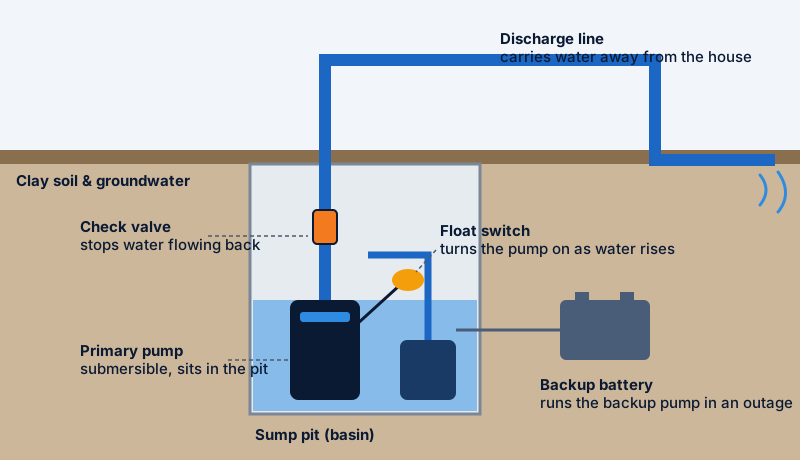
What does a sump pump float switch do? It is the pump's on and off control. As water rises in the pit, it lifts the float, and the switch starts the pump. As the water drops, the float falls and the pump stops.
Your switch type changes the likely problem and the fix.
A ball on a cord that swings up as water rises. It needs room in the pit and can catch on the wall.
A float that slides up and down a rod. It fits small pits but can stick from silt or debris.
A sensor with no moving arm. It reads the water level and has fewer parts to snag.
A separate switch that plugs in between the pump and the outlet. It can be swapped without pulling the pump.
Part of the pump body. When it fails, the whole pump may need to come out.
Set higher than the main switch, so the backup only runs if the main pump falls behind.
Our weather is hard on this one part:
Each problem points to a different fix. A good plumber tests before replacing anything.
Water rises and nothing happens. The float is pinned against the pit wall, caught under the pump or tangled in its cord. The fix is to free it and set the pump in the middle of the pit. If it sticks again, a switch type that needs less room may be the answer. This is the classic cause of a flooded crawlspace.
The pump runs with the pit empty. Running dry heats the motor and can burn it out in a short time. The plumber frees the float and checks the motor for heat damage. If the motor is worn, see pump repair and replacement.
The pump turns on and off every few seconds. The on and off levels may be set too close, or a bad check valve lets water fall back into the pit. The plumber adjusts the switch and tests the valve. See check valve and discharge line repair if the valve is the cause.
A float with a crack fills with water and stops floating. It sits at the bottom, so the pump never starts. Most floats cannot be patched, so the switch is replaced. The plumber tests the new one with a bucket of water before leaving.
The float moves, but the switch inside no longer closes. You may hear a click with no pump start. The switch is replaced. On a pump with a built in switch, the plumber explains if a switch swap or a new pump makes more sense.
A pump can shift each time it starts. After many cycles it ends up against the wall, and the float rubs or snags. The plumber levels and centers the pump so the float has room.
A tripped GFCI outlet or a damaged plug can look like a dead switch. The plumber checks power first. Wet or damaged cords near water are not a DIY job.
If a backup pump turns on before the main one, the switches are set at the wrong heights. The plumber resets them so the main pump does the daily work. See battery backup pumps.
Each plumber sets its own scope and fee, so ask when you book. Most visits include a power check, a bucket test and a look at the check valve. Ask if the fee counts toward the repair.
A tripped outlet is ruled out before parts are sold.
You see the pump start and stop before the plumber leaves.
You hear if the switch or the motor is the real problem.
You see the price before any part is replaced.
Some fixes are simple. With the pump unplugged and your hands dry, you can free a float caught on the wall or clear debris around it. Wiring, cut cords and pulling a pump out of a full pit are jobs for a pro.
If the pump is fairly new and the switch is separate, replace the switch. If the switch is built in and the pump is old or runs hot, a new pump is often the better buy. The plumber can test the motor before you decide.
Pour a bucket of water into the pit. If the float rises but the pump does not start, or the pump runs after the pit is empty, the switch is the likely problem.
Often, yes. Tethered, vertical and piggyback switches can usually be swapped alone. A switch built into the pump body may mean a new pump.
The on and off levels may be too close, or a failed check valve lets water drain back into the pit. Both make the pump short cycle and wear out early.
Vertical switches suit small pits because they need less room. Tethered switches have a longer swing and work well in wide pits. The best choice depends on your pit size.
Yes. A float stuck in the up position keeps the pump running dry, and the motor can overheat. Unplug the pump and call if it runs with the pit empty.
Need the bigger picture on pumps, pits and costs? Our local sump pump repair company page brings it all together.
What we help with
 Emergency RepairPump quit in a storm or the pit is overflowing? Safe first steps and what to tell the plumber.See details
 Pump Repair & ReplacementSubmersible and pedestal pumps tested, repaired or swapped for the right size.See details
 Battery Backup PumpsA second pump that keeps running when a storm cuts the power.See details
 Discharge Line & DrainClogged, crushed or loose lines, bad check valves and water that flows back.See details
 Sewage & Ejector PumpsAlarms, odors and backups from ejector, grinder and sewer pumps.See details
 Repair Cost GuideWhat drives the price, repair or replace, and how to get a clear quote.See details
Call to reach a local Lafayette plumber who can test the float switch and tell you if the pump itself is fine.